Young People Most Likely to Turn to AI for Emotional Support (STATISTA)
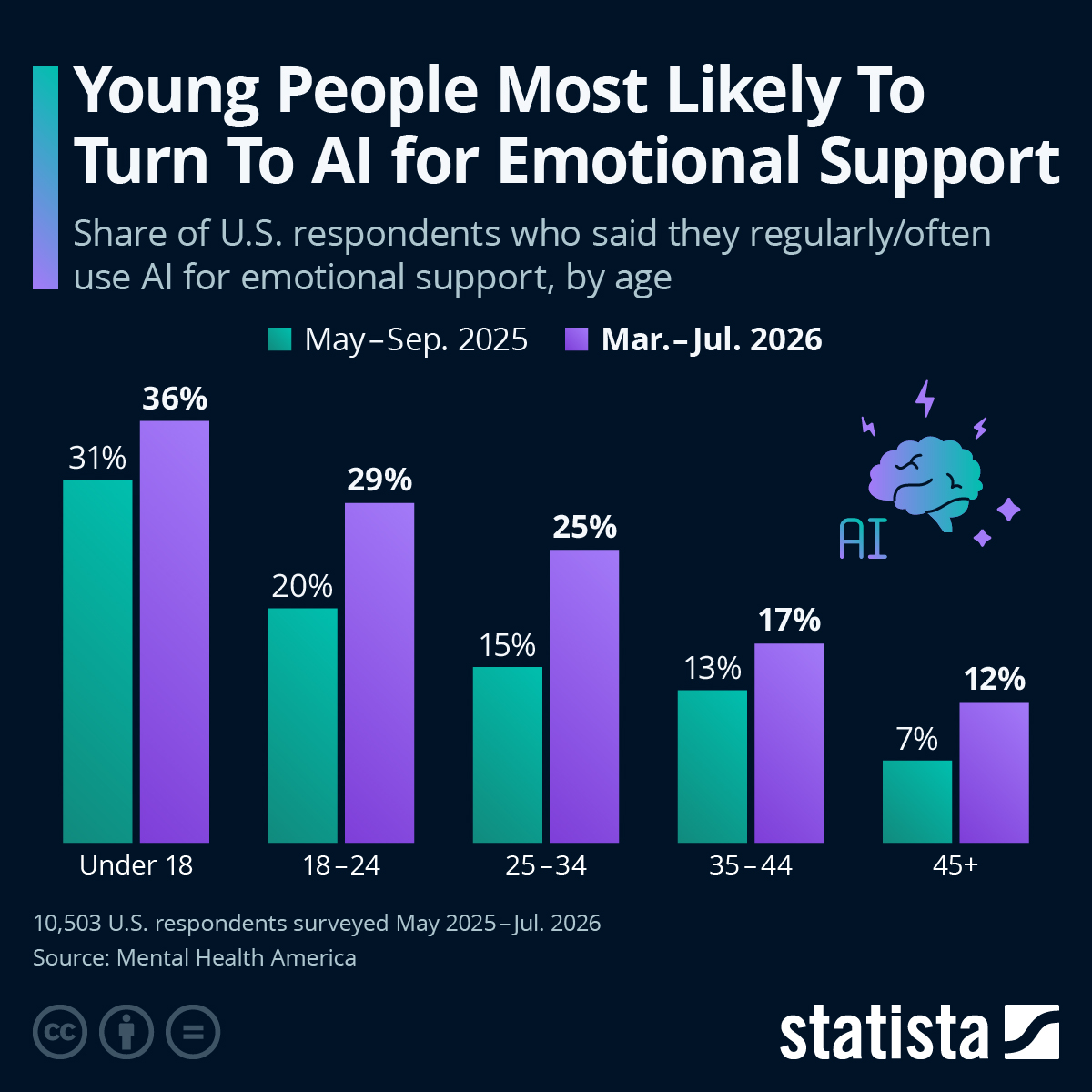
While artificial intelligence is making inroads across demographics, its adoption as an emotional support net is largely driven by younger generations. Digital natives, who already conduct much of their (social) lives online, are proving far more willing to confide in chatbots and companion apps than older users. Findings from Mental Health America, based on surveys of more than 10,000 respondents across the U.S., reveal a clear age gap that has widened over the past year. As of mid-2026, more than a third of respondents under the age of 18 reported that they regularly or often use AI for emotional support, up from 31 percent in 2025. Among young adults aged 18 to 24, adoption climbed even faster, surging from 20 percent to 29 percent.
In contrast, reliance on AI for emotional coping drops sharply with age: Just 17 percent of 35 to 44-year-olds and 12 percent of adults aged 45 and older reported regular use of such tools. For teens and young adults, chatbots offer accessibility, anonymity and immediate reassurance, especially for those grappling with social anxiety, insecurities or a lack of access to or trust in traditional counseling. However, this heavy reliance among youth also brings growing urgency to questions around psychological safety, attachment and oversight.
According to research results compiled by the American Psychological Association, AI companion apps can alleviate feelings of loneliness and help users feel heard, but there’s a real risk of digital connections gradually replacing human ones. Research has found that heavy use of digital companions can further isolate people, either by creating unrealistic expectations of human relationships or by gradually eroding real-life social skills. Chatbots’ tendency towards sycophantic behavior is another area of worry. “While briefly rewarding, constant validation can spiral into echo chambers that amplify harmful thoughts and behaviors,” the APA writes, making the case for safeguards that protect young users from potential harm.
 You will find more infographics at Statista